
'Devil Wears Prada 2' and the demise of the journalist dream job
The new movie grapples with the decline of magazine journalism, but may still believe too much in its power

Welcome to The Writethrough. Last week we got great advice and insights from Camilla Bath, a newsroom coach specializing in AI and innovation. This week: Jackie Bischof on what it feels like when the demise of your industry is a subplot in a glitzy movie.
A few industry goings-on to highlight first: If you miss RSS feeds as much as we do, check out a new project called nwsnws.com, which splits reader subscription fees amongst independent publishers based on reading time. Plus, Journalism AI is doing a workshop on May 7 at 7am ET / 12pm GMT highlighting how award-winning Filipino newsroom Rappler is integrating AI into its editorial workflow.
There was a period of time in the 1990s and 2000s when it was indisputably cool to be a journalist, particularly if you were an ambitious young woman working in magazines and TV. We knew it was cool because it became a trope in movies and TV shows, which featured female protagonists running between locations, pitching ambitious assignments and, most annoyingly, often sleeping with their sources (see How to Lose a Guy in 10 Days, 13 Going on 30, Bridget Jones’s Diary, Sex and the City, Trainwreck — the list goes on).
But behind the use of these jobs as a narrative device in Hollywood was a reality: lifestyle and fashion magazines, in particular, offered a generation of young female journalists the opportunity to stake a claim in ways that male-dominated newspapers and newsweeklies did not — even if their work was considered less “serious” and their pay and treatment bordered on abusive. Many journalists of our generation who cut their teeth on these internships went on to do impactful work in digital startups and, ultimately, to lead agenda-setting sections covering culture, society, and yes — even news — at major newsrooms.
The Devil Wears Prada, which came out in 2006, worked in part because it did a reasonably good job of capturing this world (it was based on a semi-fictional novel drawn from the real-life experience of being Anna Wintour’s assistant, after all). It portrayed some of the challenges of being a young magazine journalist — underpaid, underappreciated, patronized, yet persistent — while also helping to broaden understanding of what fashion journalism contributes. But after setting the scene, the movie swiftly veered into a heightened fantasy of what the top tier of fashion journalism looked like at the time: runway shows, travel, freebies and perks.
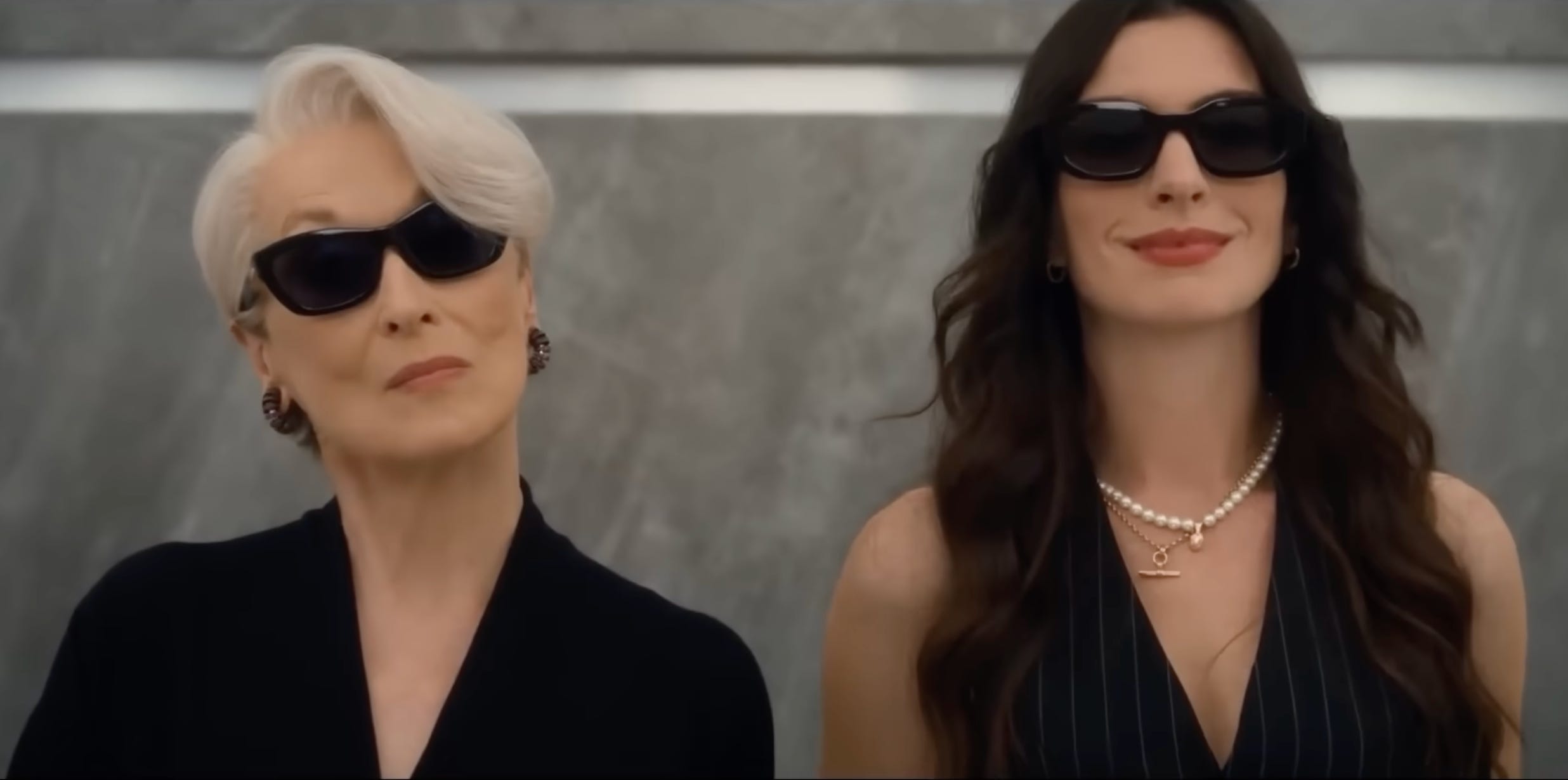
The recently released sequel does the same, creating a decent approximation of the current reality of journalism — budgets are cut, HR micromanages, editorial discussions blur the lines with ad demands and metrics, venerated newsrooms are under threat — before dressing up the storyline with high fashion and beautiful celebrities. But what more can you expect? This is a movie about beauty, culture and power, not the erosion of the Fourth Estate.
Still, as someone who has watched the industry go through profound change over the past 15 years, this scene-setting lands differently: it feels less like context and more like an upfront acknowledgment of journalism’s decline — one that’s harder to gloss over with fashion and beauty.
I shouldn’t be surprised to feel this way, as David Fear writes in Rolling Stone: “For journalists, this is a horror movie, no matter how stylish and dazzling you dress it up. Every victory is given the full Prada treatment and is still explicitly stated as being Pyrrhic. No combination of stilettos and old-fashioned shoe-leather can temper the fact that integrity, talent, hard work and a dedication to treating everything from fashion to the moving pictures with seriousness is in perpetual danger of extinction.”
I came to New York in 2008 fully bought into the magazine-journalism trope — clutching a copy of Vanity Fair and hoping my degree would catapult me into the vaults of literary journalism. Only weeks after I arrived, I watched footage on CNN of Lehman Brothers employees exiting their Manhattan offices carrying boxes, wondering — naively, at the time — what it meant for my future.
Journalism school reinforced for me that my interests lay in digital journalism and gave me my first exposure to the fields of operations, ethics and people development — something I’ve carried with me since. I landed in business journalism partly by luck and stayed — like many in my graduating class — partly because I viewed it as a safe haven. I’m fortunate that it has provided a home for me ever since.
While I still harbored a dream of writing for magazines — and occasionally did, even working for one briefly — my 15-year career has largely been spent watching from the outside in as magazines have gone through cuts, consolidation and chaos. I’ve seen wonderful brands fail and others endure. But what has been most striking is how their power and impact have dispersed, shifting from agenda-setting editorial tastemakers to social media platforms and, ultimately, to influencers. That’s what makes The Devil Wears Prada 2 most difficult for me to watch: it carries the strong implication that magazine journalism still holds power, when in reality it does not — at least not in the way it did 20 years ago.
Is that a bad thing? I loved the period of digital upstarts that gave more talented, creative journalists access to opportunities and global audiences they might not otherwise have had. It’s well known that magazine internships were often awarded through connections — and for far too long unpaid or extremely poorly paid — resulting in a dearth of diverse voices. That has changed, and in some ways I’m glad there are as many strong Substacks as there are print magazines to read (probably more, let’s be real). Power does not need to be centralized; there is freedom in a democracy of voices.
Perhaps what I mourn is that the first movie, no matter how flawed, did inspire more women to enter the field because of the opportunity — and yes, in some cases, the glamour and power — it suggested. And it’s true that a young woman watching the sequel might get a sense of the challenges journalism faces today, yet still feel encouraged by its idealistic ending. I don’t want tough realities to dissuade young women from entering journalism, anymore than they did 20 years ago. Still, today, the opportunities are rare, and the threats more existential. It’s going to take more than idealism for magazine journalists to have any kind of happy ending. — Jackie Bischof