
“Fact checking is reverse reporting”: Wudan Yan on telling the truth
Plus: Is X still necessary for journalists?

Welcome to The Writethrough! We’ve got some new subscribers here, so a quick recap: The Writethrough is a weekly career newsletter for journalists, created by friends and former Quartz colleagues Sarah Todd and Jackie Bischof. The newsletter is reader-supported — meaning a paid subscription helps us keep producing the interviews, essays, advice columns, and other features on the twists and turns of the contemporary media industry. Show us your support by signing up for a $5 monthly or $60 annual subscription here:
When I logged onto Bluesky Sunday night, I felt I’d time-traveled back to Twitter in 2016: My timeline was full of journalists subtweeting a post about what it takes to be successful in journalism.
One of the joys of this type of discourse is that it’s not really necessary to look up the original tweet to understand what’s going on, which was basically: Someone had said journalists had to be on X (formerly known as Twitter) to be influential in the industry, and everyone on Bluesky vehemently disagreed. This makes sense, because I’d guess that most people on Bluesky, including myself, are people who’ve either left Twitter entirely or have what’s essentially a shell account to use occasionally for work.
Still, it was fun to hear what everyone had to say. Ben Collins, CEO of Global Tetrahedon (the media company that owns The Onion), scoffed at the idea that X is mandatory: “The Onion quietly left Twitter a month ago and... our weekly subscribers went up. It’s because we’re doing well here, on Instagram and on YouTube.”
New York Times columnist Jamelle Bouie argued, ”[I]f the goal is to be influential — rather than just post — then you need to grab a mic and turn on your front facing camera.”
I agree that X is less relevant for the media industry than it used to be. (It also was never a top traffic driver compared to other platforms to begin with, and had a comparatively small, though very engaged, user base.) And I get why Instagram and YouTube and TikTok are all much more useful today for journalists who are trying to build relationships with their audiences. I’d say Substack is a viable choice too. Its app has a feed that’s very reminiscent of early-days Twitter or Tumblr, which I mean both as compliment and insult. (Gossip, navel-gazing, deft analysis, humblebrags, goofy memes: The feed contains multitudes.)
But I’m not convinced there’s any safe bet for journalists when it comes to platforms. The story of X, and Facebook before it, a reminder that the huge audiences that people build can disappear if the platform devolves and drives people to leave in droves. Instagram’s algorithmic changes have a lot of creators convinced they can’t reach audiences as they once did, too.
That’s not to say journalists shouldn’t try to form relationships with readers on social media platforms. That can unlock a lot of opportunities, or so I hear! And it’s a real asset to be able to have a portable audience who will follow you no matter where you’re working (especially if you wind up working for yourself). But for better or worse, I don’t think having a lot of followers is a strong safety net for journalists or a guarantee of the type of career they’ll get to have.
So what does matter, you might ask while clutching the roots of your hair, or perhaps you’ve decided to just embrace nihilism. I’d say the truth still matters a lot, ethically if not necessarily monetarily.
To that point, today’s interview is with Wudan Yan, a fact checker and narrative science journalist for publications like The New York Times and The Atlantic who recently launched her own fact-checking agency, Factual. Wudan talked with us about how starting her career as a fact-checker shaped her approach to reporting, her advice to journalists on avoiding mistakes, and why readers should be wary of a lot of nonfiction books. — Sarah Todd
“Annotate as you write”: Wudan Yan on her career as a fact-checker and journalist
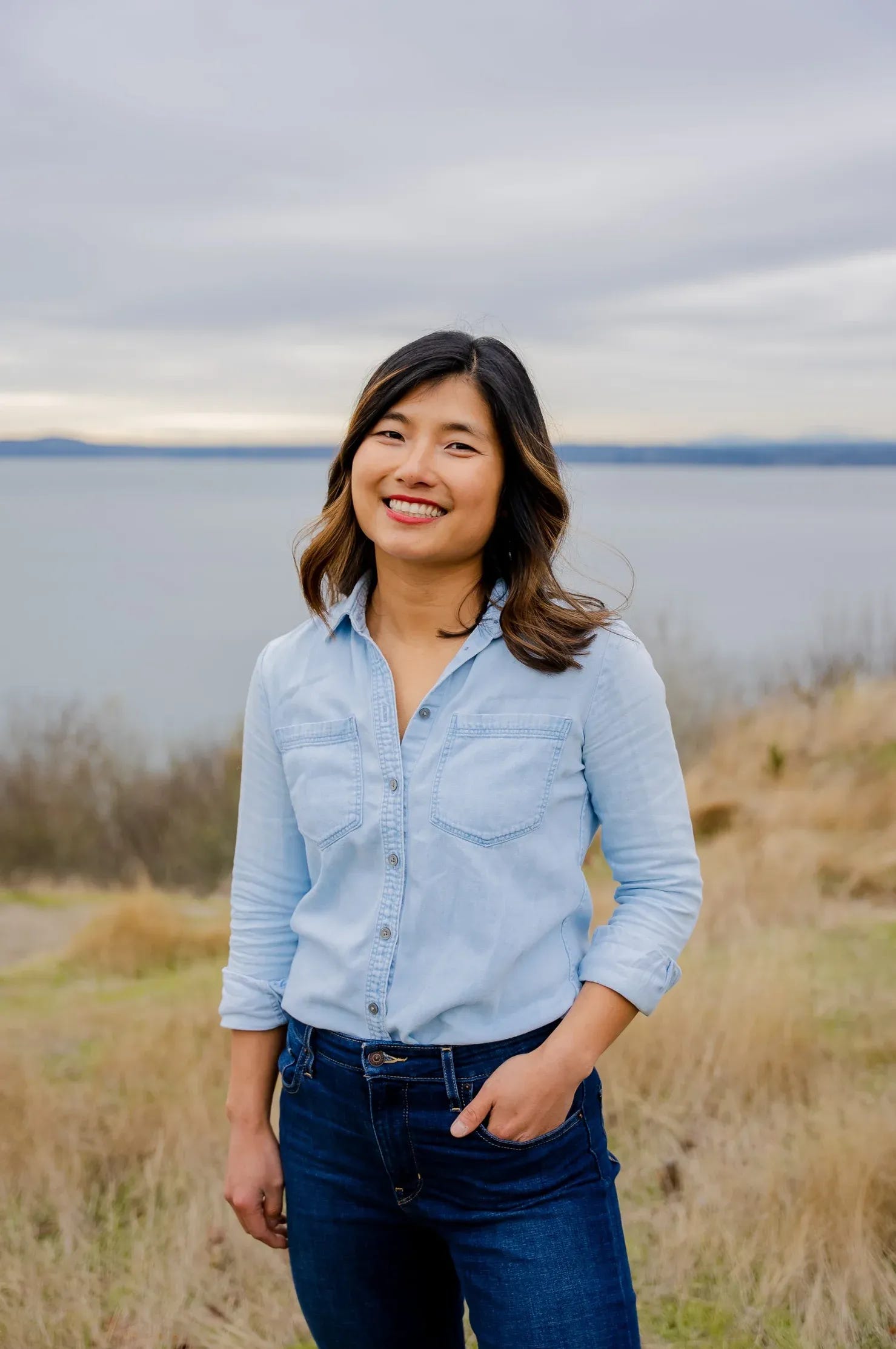
Wudan Yan is an award-winning narrative journalist, fact-checker, and entrepreneur based in Seattle, Washington. Her writing has appeared in The Atlantic, California Sunday Magazine, High Country News, MIT Technology Review, The New York Times, Popular Mechanics and beyond. She is a multi-grantee of the Pulitzer Center for Crisis Reporting and has also received grants from UC Berkeley, the Institute of Journalism and Natural Resources, and the International Women’s Media Foundation to support her work. On top of her editorial work, Wudan has founded two companies: The Writers’ Co-op, a business podcast and learning academy for freelance creatives, and Factual, a fact-checking agency.
This interview has been lightly edited for length and clarity.
You started out your career as a magazine fact-checker. What was that like?
When I started in journalism, the year was 2014. I was living in New York and I was trying to leave my PhD program. In learning about how to get into science journalism, people told me, if you don’t want to go to J-school and you want to learn the practice of journalism, look for internships at magazines that still use fact-checkers and learn how to fact check. Because fact checking is basically reverse reporting. And that is exactly the advice that I took to a T.
I had no connections in the journalism industry, and so I just sent emails to every science magazine I read based in New York to see if they would take me on as an intern. And Nautilus Magazine did. I show up on my first day, there’s a feature in my inbox and they’re like, This is what a fact check report looks like. This is the writer’s documentation. Go.
I made a bunch of phone calls; I got over that discomfort of calling a stranger really fast. I learned how to organize my own reporting as a journalist from those early experiences.
Fact checking is primarily a magazine model. The history of it is pretty interesting. It started up in the 1920s. There was a great New Yorker feature about the history of its vaunted fact-checking department, but it goes into the conflict that the editor of the New Yorker had with the editor of Time Magazine. And so it was kind of a competition to see who had the best fact checking department.
How has fact-checking in journalism changed over the years — both in terms of staff fact-checker positions and approaches to fact-checking?
The type of fact checking that I do is called pre-publication fact checking. I am the backstop to making sure that the misinformation is not produced in the first place. Another form of fact checking that has become more in the spotlight is post-publication fact checking, which is what political fact-checkers do during debate.
But when we’re talking about pre-publication fact checking, the biggest way I’ve seen it change is we have the software now to record interviews and then also have them transcribed by a machine for really, really affordable rates.
When I started, it was a lot of [writers typing] notes really fast from an interview. They might have an audio recording, and they could timestamp it, but there might not be a transcript — they didn’t have to go through the tape themselves and type everything word by word. The standard was to call up the source because they’re the primary source. And now I think so much is better because we’re able to get AI transcripts. Sources can’t walk back on things that they’ve said six or seven months ago. A fact checker gets the whole context in which a quote is expressed.
As far as staff fact checker positions, I believe there are fewer because just because there are fewer magazines; we are now a century out from when fact checking started. Anything that’s been around for a century is going to evolve and change and there are going to be fewer jobs.
How did you decide to start Factual? Can you tell us a bit about how the agency works?
I started Factual in October 2024, and I spent about the six months leading up to that building the agency. The idea came because in the years leading up to that, I was very frequently asked by managing editors at various publications, not if I can help them fact check projects, but if I had recommendations for good fact checkers. And I was like, wait a second. That’s basically your job. If you’re an editor, it’s your job to staff up people to help your publication do the thing it’s meant to do.
At first, I was like, sure, here’s some names. And then I was like, I am doing their jobs for them and they need to pay me a referral fee. So I started asking.
I started Factual as an extension of that. The idea was what if I had a vetted pool of fact checkers across many subject matter expertises who have a range of experience, across not just magazines, but books, podcasts, and documentaries, who can step in on a project.
Then in the process of creating Factual, I realized that I was also setting standards with our clients as to what I expect from them, in terms of turning in annotated drafts to us and in terms of what a fact check report ought to look like that we send back to all of our clients. I think a lot of people want that standardization.
How does your background as a fact-checker inform your narrative journalism, and vice versa?
I alluded to this in the first question — my reporting notes are incredibly organized. The other thing I do too is when I am writing, I am annotating as I write. And when I’m reporting, I’m thinking about, how do we know that this is true?
I’ve reported in places where disinformation runs rampant, in the United States; where people are wary of a journalist, in a lot of places in Asia that I’ve been. I’ll listen to somebody tell their story, and then I’ll ask questions like, Do you have documentation of this? Oh, wait, you mentioned this really interesting thing. What’s the evidence?
Sometimes people will get taken aback by that. To me that’s an opportunity to explain what primary sourcing is, and why journalists care about it. That ultimately made people a little more comfortable and trust the process of producing journalism a little more.
How does your background in fact-checking affect your relationship to the truth in everyday life? (I’m wondering, for example, if you wind up texting with a self-correction after a casual conversation at a party.)
I just want to say that I’m generally a joy at parties. I am not constantly fact checking other people. I usually say, after work hours, I am not getting paid to fact check my friends. So most of the time you get a pass except when something is so egregious, I need to say something.
It’s fascinating to me that so many nonfiction books aren’t fact-checked. How should that affect the amount of trust readers put in them?
Yeah, readers should be very skeptical of books that purport to be nonfiction. One thing people can do is go to the acknowledgements of nonfiction books and see if there are any fact-checkers credited. I think that really builds trust. I even think that if an author says parts of this book were fact-checked and I take responsibility for the rest, it shows to me that there is accountability for the author.
Do you have any recommendations for journalists about processes or best practices for fact-checking their own stories?
I just want to clarify that fact-checking refers to a third party person trained in journalistic practices who is not involved with the story. So one cannot fact check their own story. One can double check their own story, but I would not necessarily call that fact checking.
So my primary recommendation is probably to annotate as you write. I would guess that most reporters are writing with their notes in front of them, and it probably does not require that much more work to at least make a footnote or comment as to where that fact came from or what document they referenced or what random PDF or scientific study they’ve encountered on the internet, because there’s a chance they might not find that again, or might have to look really hard to find that again.
What’s a memorable exchange that you’ve had with a writer you’ve fact-checked? Do you ever get into extended debates, like in The Lifespan of a Fact?
I love Lifespan of a Fact. I don’t really have exchanges with clients who I fact checked, and I think that speaks a lot to today’s media environment. I think by the time people realize they need something, they really needed it fact checked three days ago. And so when they get a fact check report, they’re just eager to implement the suggestions for accuracy.
Most of the time I’m just asking for more source material to corroborate whatever it is that’s written, and I try to provide fact-check reports that are crystal clear about a suggestion that they could utilize to make something more accurate.
What publications do you think have the best fact-checking processes today?
I’m sure the New Yorker still does what they did a century ago. More places are trying to weave in fact checking, including newsrooms, radio stations, podcast production networks, nonprofits. [But] a lot of people never learn how to properly fact check. There isn’t a fact-checking certificate in the United States. There isn’t a course that every fact-checker has to take. I think depending on where you are trained, how you fact check may look very different.
A good example of this is, two years ago, a colleague of mine called me up asking for help to fact check a book. She was on a pretty tight turnaround, so she was assigning the same book out to multiple fact checkers. This is also getting more common because there’s no time in the book publishing process to really dig in for one fact checker. So I returned the report and she was so thankful that I provided really clear, actionable suggestions for accuracy. I was like, do other people not? I think some people just point out the inaccuracy, but don’t necessarily give a way to fix it. But to me, I was always trained [that] fact checking is kind of the last check and balance. When it goes back to the editor, things have to be put in real quick because a story has to go to layout, something has to go to print. I’m lucky to have had the training that I’ve had.
This interview with Wudan Yan is so delicious and satisfying. During and after journalism grad school, I was a fact-checker trained at the former Time Inc. Magazines, first at Money magazine and later at Entertainment Weekly. The fact checking standards at Money were very, very high as a personal finance publication. And I found I really enjoyed fact-checking the data heavy stories. I use these fact checking skills to this day, in the research, data and analytics worlds albeit not to the level I did as a journalist. My fact checking training at Time Inc serves as a foundation of excellence that I try to maintain in any work product. It saddens me that the art form of fact-checking has greatly decreased in the last 10 years or so. But Wudan’s story and arc to her own consulting business gives me hope. Thank you for sharing this.